Chiltern Railways: goodbye to privatisation’s poster child
Britain’s railways are being renationalised, as the Labour government ends a 30 year experiment in privatisation. Our local railway, Chiltern Railways, last week returned to public ownership under Great British Railways.
John Major’s decision to sell off British Rail in the 1990s was controversial. One of Major’s own Conservative MPs, railway enthusiast and author Robert Adley, dubbed it the ‘poll tax on wheels’, hinting that it could prove as unpopular as Margaret Thatcher’s ill-fated local property tax. (Significantly, Thatcher never dared sell off the railways.) Rail expert Christian Wolmar wrote a damning account of rail privatisation under the title Broken Rails. The sell off replaced an integrated railway with a fiendishly complex system of 100 separate companies, creating lucrative work for lawyers but left the taxpayer with an even bigger bill. (In 1993/94 BR received £1.35bn in public subsidy; in 2005/06 the taxpayer gave the privatised railway £6.5bn in subsidy.)
Yet one rail company showed how privatisation could have transformed the railways through outstanding, enterprising leadership: Chiltern Railways under the late Adrian Shooter. As Christian Wolmar commented when Shooter died in 2022:
‘While, for the most part, privatisation of the railways has been an expensive failure delivering little new at great cost, Shooter was the one person who exploited its potential.’
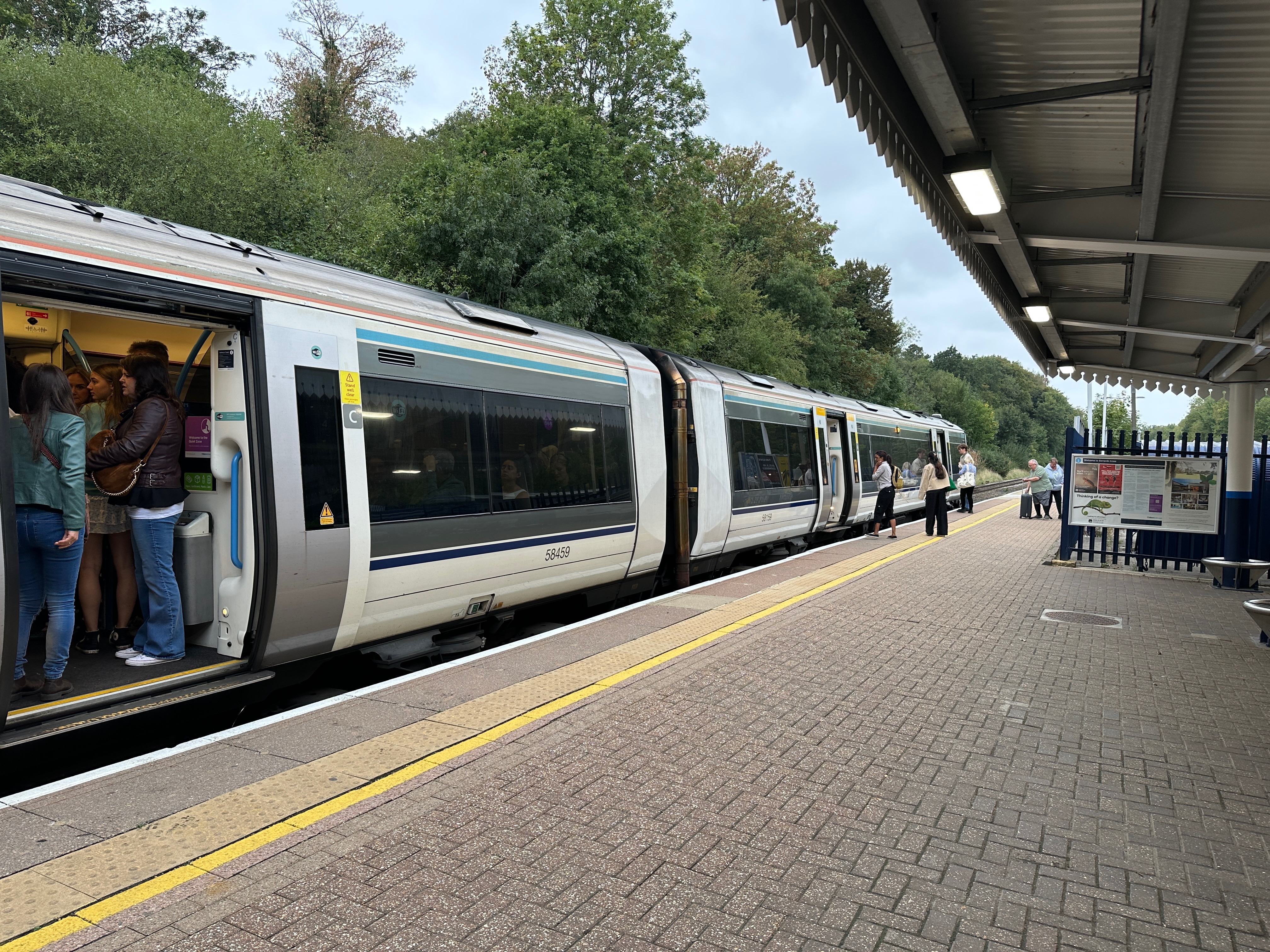
An Oxford to London Marylebone service at Gerrards Cross, Friday 19 September 2026
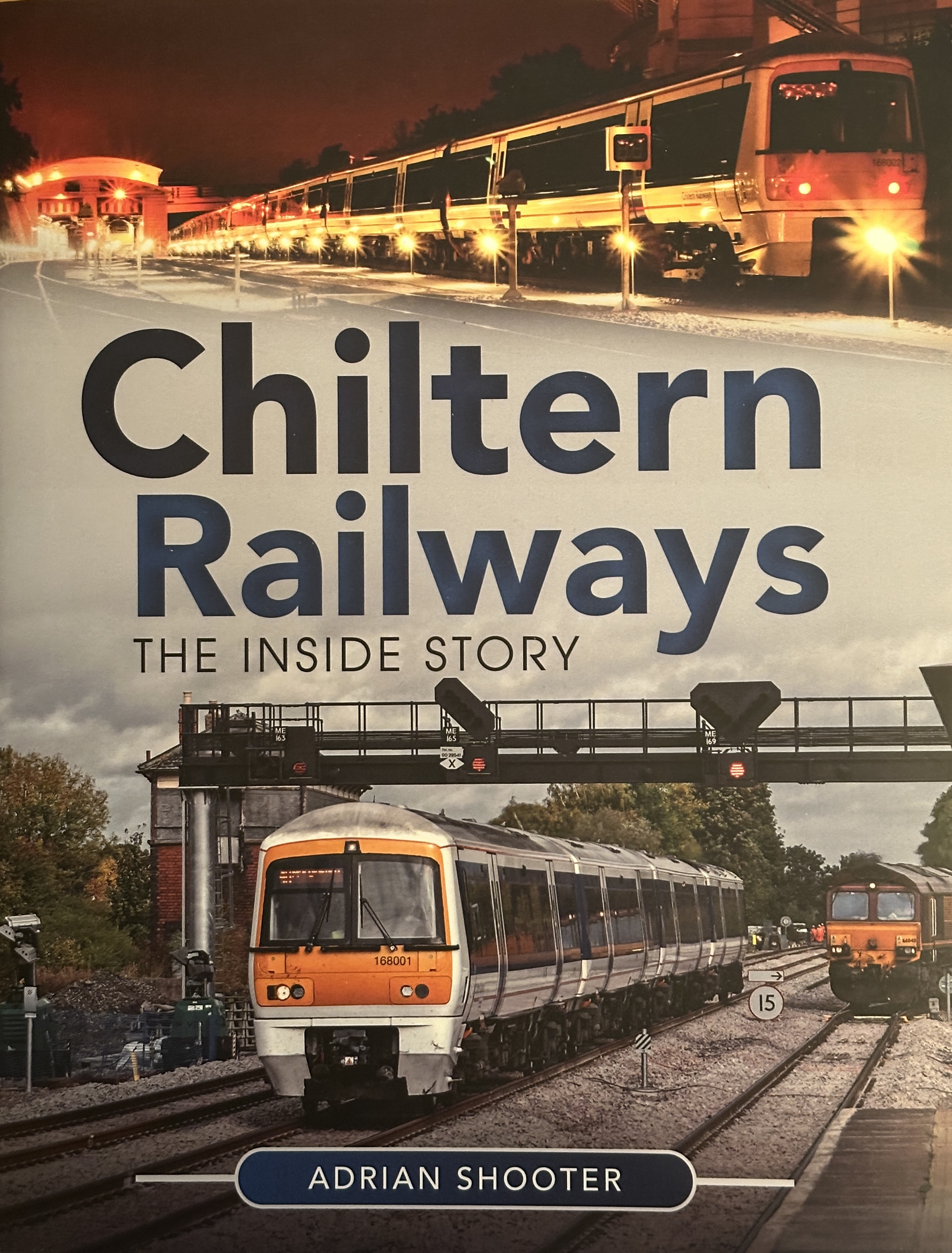
Just before he died, Adrian Shooter wrote a fascinating account of how he and his team transformed this minor local commuter railway into a modern main line from London to Birmingham and Oxford. Chiltern Railways – the Inside Story, published by Pen & Sword, is almost a blueprint for the revival of Britain’s railways, regardless of ownership.
Shooter set out to create and operate the best passenger railway in Britain. He acknowledged in his book that he started with the advantage of the existing route’s total modernisation by British Railways with new trains and modern signalling. At one point, London Underground threatened to double the cost of Chiltern running its trains over the Met line but Shooter’s team cleverly spotted that BR had passed on to their company the running powers granted by the Manchester, Sheffield and Lincolnshire Railway Act 1893 to run trains from Amersham over the Met.
The customer comes first
The car rental firm Avis turned not being the market leader into a marketing advantage: ‘We try harder’. Under Adrian Shooter, Chiltern Railways followed the same philosophy. The rail industry isn’t famous for customer service, but Shooter wanted to attract passengers who used other rail routes, especially Euston to Birmingham. The biggest challenge was that BR had singled 28 miles of the line to Birmingham in 1969. (Can you imagine the government reducing the M40 to a single lane because there was no need for a competing London-Birmingham motorway?) This meant that Chiltern couldn’t run more than one train an hour each way between England’s two biggest cities.
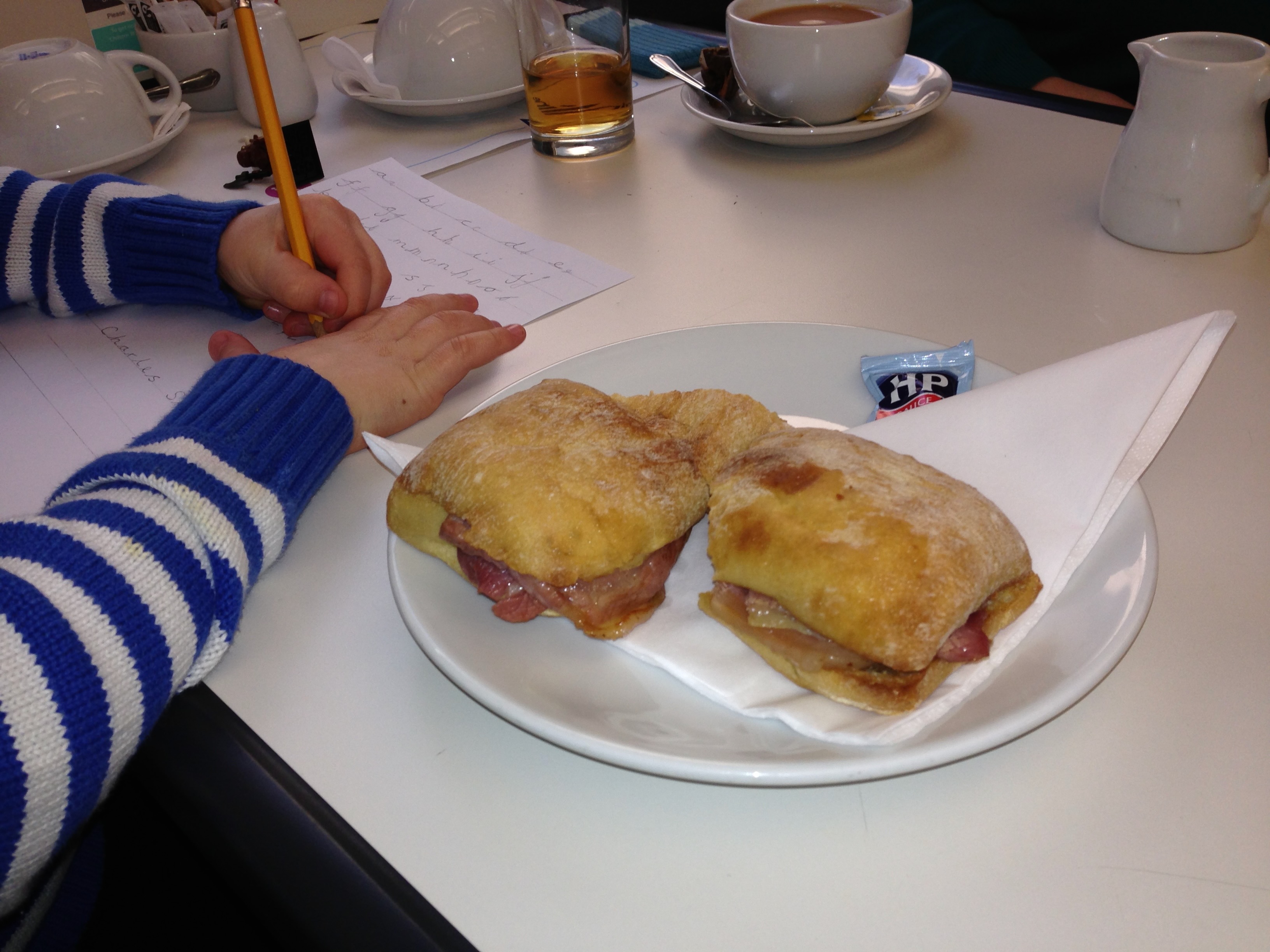
Breakfast on Chiltern Railways Mainline service to Birmingham, 2013
Railtrack, the privatised owner of the track, was not interested, so Shooter gave the Financial Times transport correspondent an exclusive story explaining how Railtrack was holding back a plan for restoring a true mainline service. It worked a treat, and by 1998 the first 18 miles from Princes Risborough to Bicester had been doubled. The company won the only 20 year rail franchise, which made possible Chiltern’s rebirth as a main line railway. Shooter also built a close relationship with the West Midlands business community to gain the region’s support for his aim to provide a worthy – and far cheaper – service to London, including the new Warwick Parkway station, opened in 2000, followed by doubling the remaining single track to Aynho Junction in 2001. Later, the company re-engineered the junction at Northolt to allow 100mph running. (As a Chiltern commuter for many years, I remember how slowly trains used to negotiate Northolt Junction, giving plenty of time to admire the waste depot there. Thanks to these changes, you can now get from Gerrards Cross to London in just 17 minutes on the fastest service.)
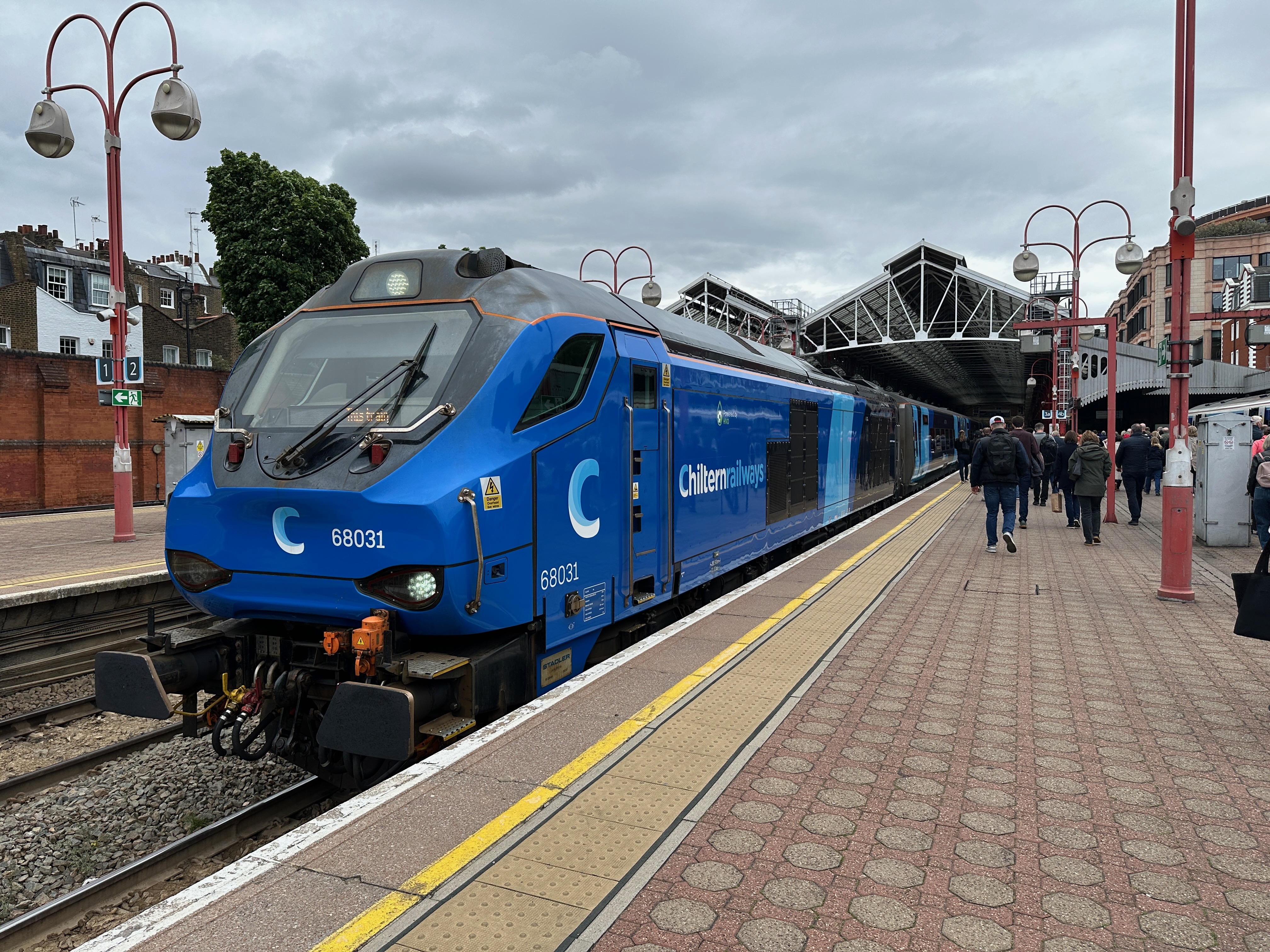
Rival Chiltern and GWR services to London, seen at Oxford, 23 September
Chiltern invested £800 million in these substantial improvements, including adding a link to Oxford to compete with the existing service from Paddington. This was largely funded by borrowing against the extra revenue that followed from giving large towns like Leamington a far better service. (Before privatisation, Leamington had a train to Birmingham every two hours, compared with four an hour now.) Chiltern reintroduced loco hauled trains, featuring BR’s Mark 3 coaches, which were still very comfortable after almost 40 years.
Today, you can buy a train ticket on your phone in a minute. Thirty years ago, you typically had to queue at the station to buy one, which prompted the newly privatised Chiltern to instal machines that sold tickets for popular destinations in just 12 seconds.
Disaster! The Gerrards Cross Tesco tunnel collapse
Above: the collapsed Tesco tunnel, Gerrards Cross, with framework for the store in background.
In 2005, the Chiltern mainline at Gerrards Cross, Buckinghamshire, was blocked for seven weeks after a tunnel created to make room for a new Tesco supermarket collapsed just before a train was due to pass through it. Adrian Shooter gave the inside story of the drama in his Pen & Sword book, including his securing £10m from Tesco’s chairman, David Reid to keep Chiltern running and to fund marketing to win customers back when the line reopened. Chiltern later won further compensation.
The tunnel collapse was a major event in Gerrards CrossSunday 3 July 2005
Chiltern and Tesco were very lucky that the collapse happened between trains. At 19:34 on 30 June 2005 the driver of the 17:40 from Stratford on Avon to Marylebone noticed the collapse right in front of him as he was about to leave Gerrards Cross. His quick action in reporting this led the signallers to put all signals to red. I had a lucky escape myself. I was on the last northbound train to pass through the tunnel 15 minutes earlier, on the last leg of my journey home from Chester. (I had had the painful task of announcing PR team redundancies at Marks & Spencer Bank’s HQ in the city.) For the next three weeks, my wife Karen and I commuted to London by car, as she had a parking space at her office in Wigmore Street. It was a painfully slow experience, although it meant we got home more easily on 7 July, the awful day bombings closed London’s public transport network for hours.
Batman and Robin
Adrian Shooter revealed in his book that Chiltern sent ‘Batman’ and ‘Robin’ to schools to teach children about the risk of trespassing on the railway. I recognised Robin – real name Dave Newell – as our favourite train driver. On a late night train home from London in around 2005 we were impressed by the way he skilfully dealt with a group of drunken youths. Five years later, I was delighted to recognise his voice on the tannoy as I travelled home. He was giving friendly advice to take care on icy platforms. I chatted to him when I got off at Beaconsfield He greeted me with his characteristic smile and asked if the heating was working inside the train (it was) as he had no heating in the cab.
I tweeted my thanks and as a result Chiltern’s social media team shared details of Dave’s tireless rail safety work with schools, which has been recognised with the MBE and industry awards. As Adrian Shooter said, Dave and ‘Batman’, the late Mick Benson, were superb ambassadors for the company.
Crashing bedside lights and bridge bashes
In 2002, I started commuting from Seer Green & Jordans station in Buckinghamshire to my job in London. I first heard of this obscure station in 1981 when I read about a crash there which killed four people in a blizzard. Little did I imagine back then, as a Welsh six former, that I would one day become very familiar with Seer Green. Chiltern introduced a new timetable not long after I became a Seer Green regular, which caused chaos. Mike Bagshaw, the company’s commercial director, proved a customer champion, but probably regretted giving me his mobile phone number. As a member of HSBC’s PR team, every 10 days I had to catch the first train of the day to get to head office to prepare the morning’s press cuttings for chairman John Bond and other executives. One morning there was no sign of the 6am train, and after 10 minutes I was panicking. I called Mike’s number, and was greeted by the sound of a loud crash. I must have woken him, and the noise was presumably his bedside light crashing to the floor as he tried to turn it on. He promised to find out what had happened. My train eventually arrived, but it was a stressful morning.
Not long after, stuck on a stranded train, I called Mike again, on behalf of a carriage of frustrated, delayed commuters. He was always helpful, and I was not surprised to learn he went on to even greater things, including planning the final stages of the Elizabeth Line, and its opening.
That bodged new timetable showed that the best run railways can get things wrong, causing frustrations for thousands of people. But Adrian Shooter gave a great example of how not accepting conventional wisdom can save disruption. One evening some 20 years ago I arrived at Marylebone for my train home to discover all services were suspended. A lorry had hit an overbridge, and no trains were allowed to pass over it while an engineer set out to inspect the site. Shooter went on a crusade to ‘stop this nonsense’. He found that fewer than 30 bridges nationally were hit repeatedly, yet nothing was being done to prevent this happening. It was very rare for any damage to be caused, and Chiltern arranged for better signing and protective beams for vulnerable bridges on its network. As a result the company reduced the percentage of delays caused by bridge bashes from 8 percent to 2 percent.
No longer welcome to Wrexham…
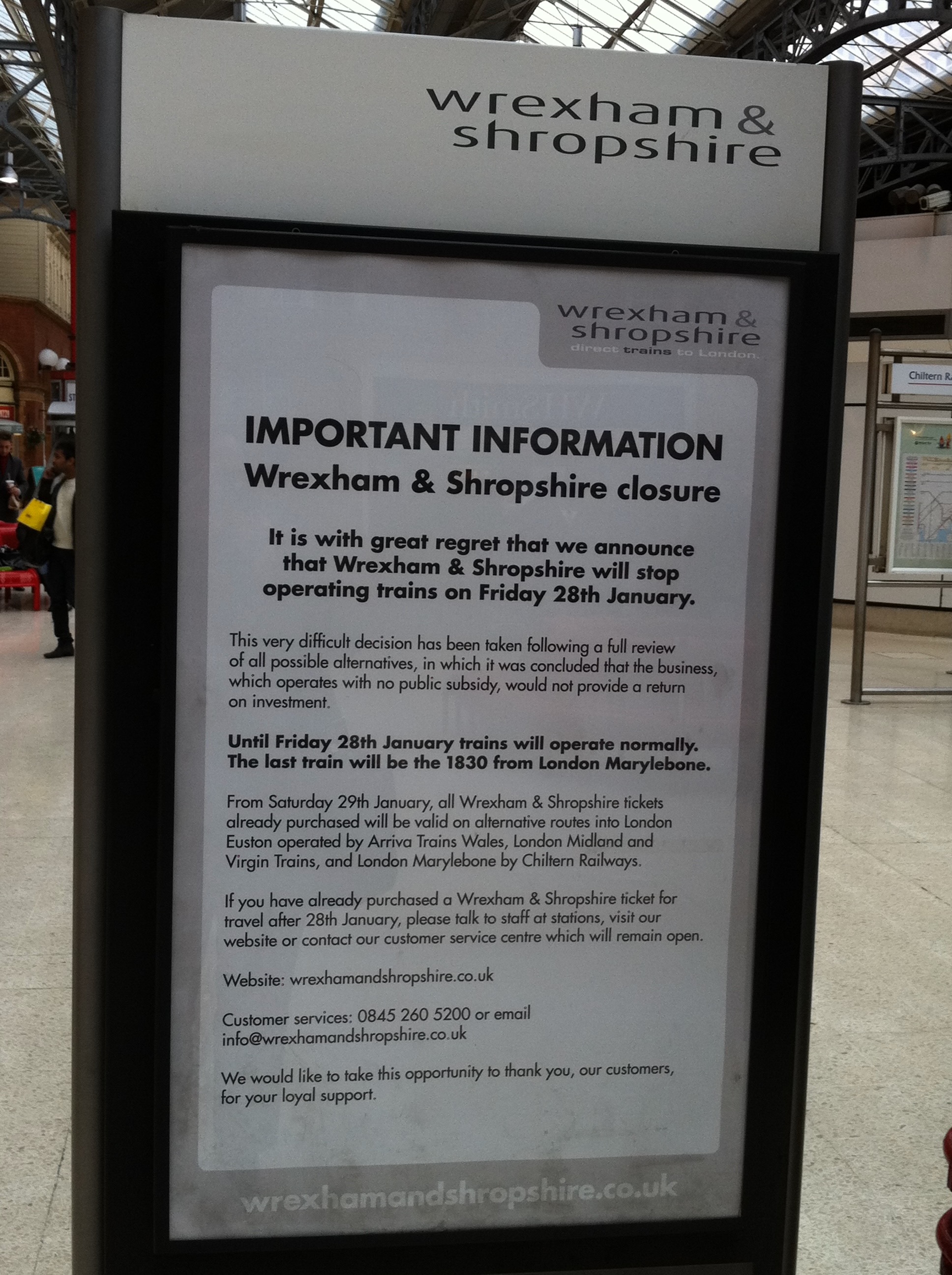
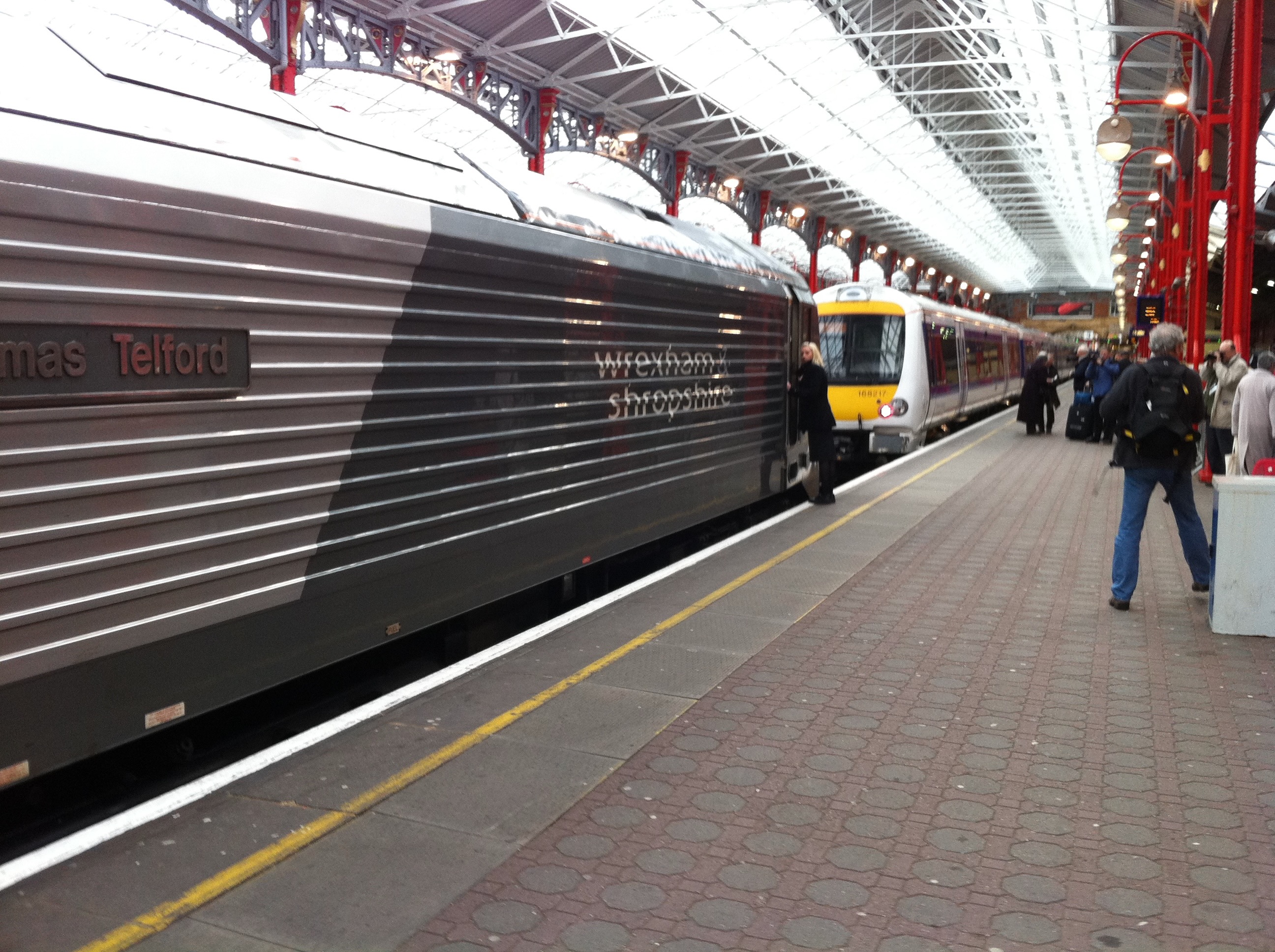
One of Adrian Shooter’s bold moves was to operate trains to Wales. The Wrexham & Shropshire railway began services from Marylebone to Wrexham in 2008 – the first direct service between London and Wrexham since the 1960s. The Guardian’s John Vidal described it as ‘a hidden gem of the rails’, He added:
‘But the big secret of its success is the North Walian crew. Not only do they encourage you to go into the first class seats however much you have paid, but when there is an announcement to be made, the train manager will walk through the carriages and tell you in person. If you want a meal, do not expect a shrink-wrapped sandwich, delivered at speed. No, sit down, read a book, relax and all in good time chef will bring lamb shank or whatever, with proper carrots and spuds and good wine to your table.’
Sadly, the odds were against the plucky newcomer from the start. It was an ‘open access’ service, so wasn’t allowed to call at Birmingham New Street. I happened to pass through Marylebone on the day it closed, and witnessed the sad scenes as photographers captured the departure of the last service to north Wales.
Reflections on rail privatisation
All change: Britain’s railways are nationalised, 1948. Colourised photo by mediadrumimages/Topfoto via Daily Mail
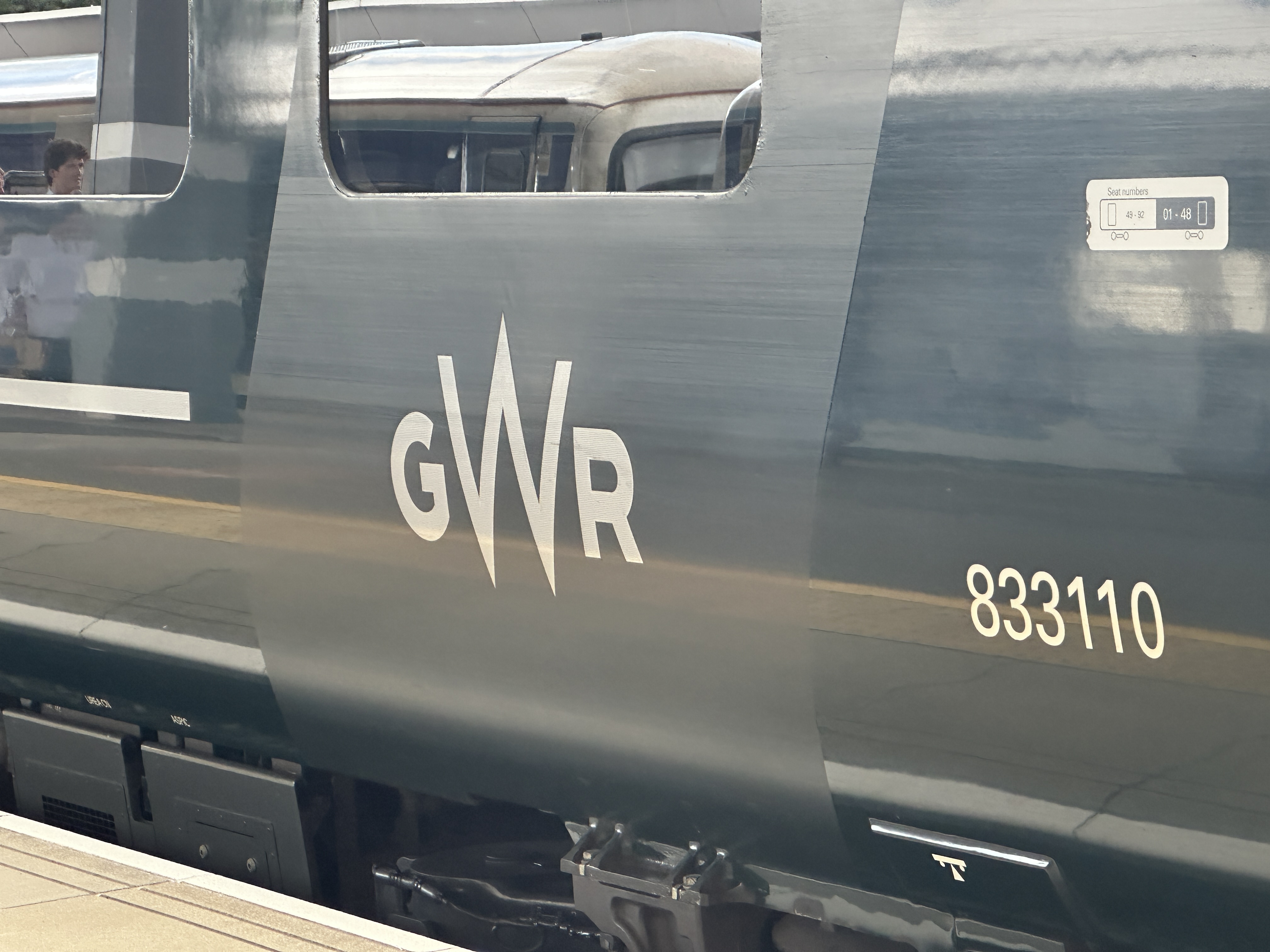
During the 1970s and 1980s, the idea that trains would once again carry a GWR logo seemed far fetched except in the dreams of the many fans of ‘God’s Wonderful Railway’. Yet privatisation did bring back GWR trains, along with those branded LNER and Southern Railway, even if the companies running these services were a far cry from their huge integrated pre-war namesakes. (The other member of the inter-war Big Four, the LMS, was the largest joint stock company in the world, and Britain’s second biggest employer after the General Post Office.)
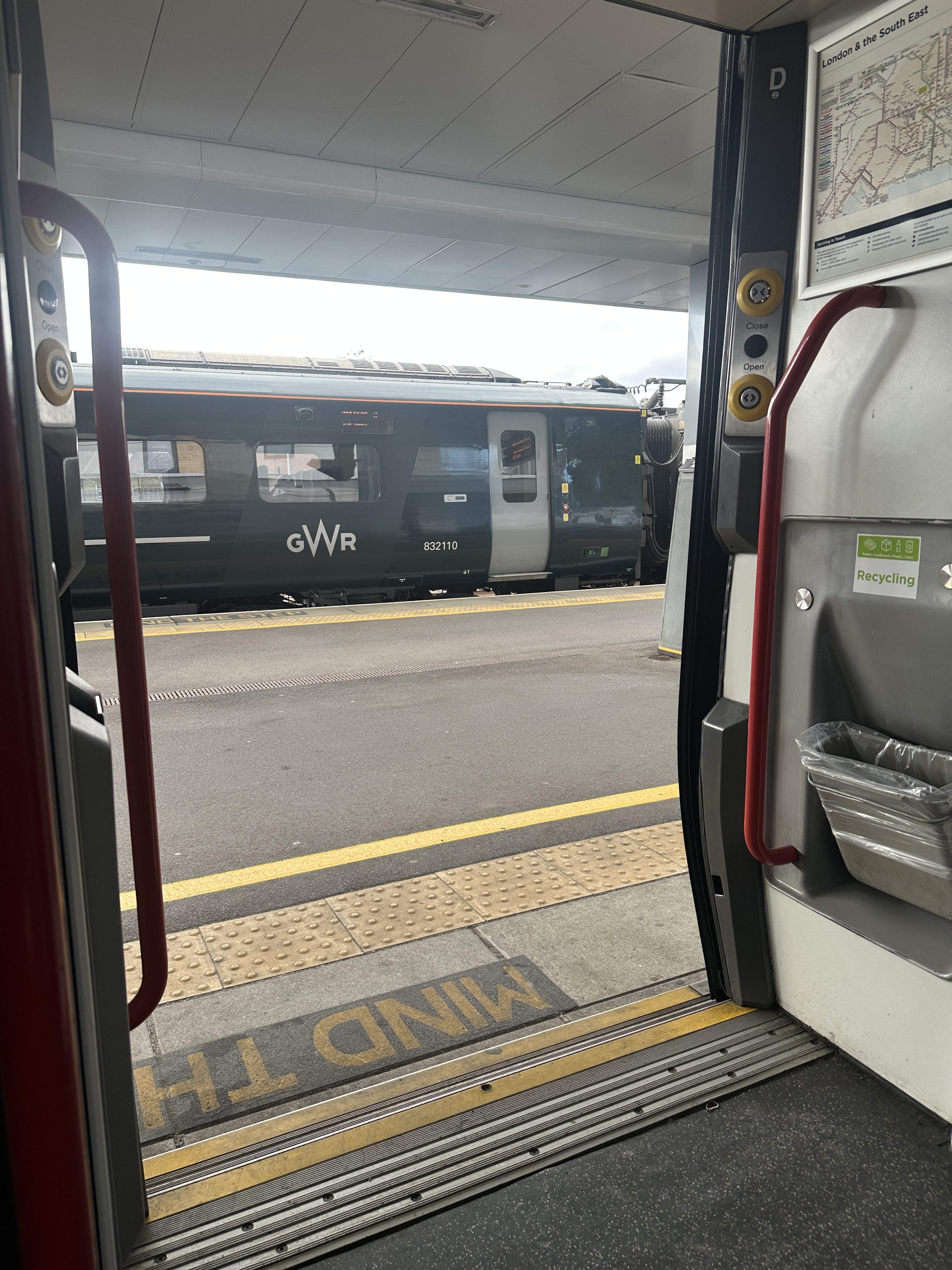
Oxford, 23 September 2026Oxford, 23 September 2026
John Major, the prime minister who privatised the railways, had the romantic idea of bringing back the Big Four as integrated regional companies, owning and running all their own trains, track and stations. But the all-powerful Treasury pushed for a separate infrastructure authority. (It even had the madcap idea of selling off individual train paths, which would have made privatisation even more chaotic.) Major’s unexpected victory in the 1992 general election resulted in a mad rush to push through the sell off during that parliament. This meant that the government didn’t evaluate the options properly, instead publishing a very vague privatisation plan in a badly drafted white paper just 21 pages long.
The white paper started by rejecting the idea that British Rail was a failure:
‘British Rail has made significant improvements in recent years. Its efficiency compares well with that of other European railways. The productivity of the BR workforce is among the highest of any European railway.’
It went on to reject the idea of a return to the Big Four:
‘For the foreseeable future no regional company could be sold outright as each would be entirely dependent on continuing and large subsidies from the taxpayer.’
This was an extraordinarily inaccurate claim given that taxpayer subsidies actually increased significantly under the fragmented railway system that privatisation created. (Even the free-market think tank the Institute of Economic Affairs acknowledged that subsidies had tripled in real terms since the days of BR, through this fragmentation. I should point out that the IEA called instead for a privatised model where private rail companies would be free to close lines and end loss-making services, an idea that Sir Humphrey would have called ‘very brave, Minister..’.)
Safety last
The Hatfield disaster. Photo: PA Media via BBC
The early years of privatisation were marred by a series of disasters that were caused, at least in part, by the sell off. Adrian Shooter pointed out that Railtrack, the private company that owned and managed the rail infrastructure, saw itself as ‘a property company with an inconvenient railway bit attached’. Railtrack got rid of almost all its senior engineering people with, in Shooter’s words, ‘entirely predictable results’.
To be fair, BR wasn’t perfect in managing railway infrastructure safely. Its lack of proper processes and controls led to the deaths of 35 people in the Clapham Junction disaster in 1988. Just before privatisation BR was planning a digitised map of the network to help assess the safety of the track and bridges. But Railtrack scrapped the project, and subcontracted maintenance and inspection to other companies without retaining the experts and processes needed to oversee them. This led to the broken rails and points that caused the Hatfield (2000) and Potters Bar (2002) disasters. By the time of Potters Bar, Railtrack had been nationalised to avoid financial collapse, with a new publicly owned company, Network Rail, taking over.
A passenger boom
Supporters of rail privatisation like to point to the dramatic increase in passenger numbers since the sell off. As we have seen, enterprising companies like Chiltern have created a better service, attracting more customers. In the 1990s, Virgin Trains boasted about better facilities, such as an on-board shop, although it’s debatable whether this mattered as much to customers as a fast, reliable service.
Sceptics have noted that numbers were already rising during the last days of BR, as the network recovered from the late 1980s recession. And BR itself was transformed into a truly integrated, business minded railway, with InterCity and Network SouthEast amongst other sectors making the most of modern marketing and PR tools to attract new customers. The days of seeing railways as an industry in terminal decline were over, and BR started reopening lines that it had closed under the Beeching Axe of the 1960s – a trend that continues to this day. It seems certain that a boom in passenger numbers would have happened without privatisation, especially under the thriving economy of the late 1990s and 2000s. And the data for the BR era may understate the number of journeys, given that BR had no automatic ticket machines, and patchy ticket checks.
Adrian Shooter’s legacy
Adrian Shooter’s bust at Marylebone station, London
Chiltern Railways – The Inside Story now serves as an epitaph for Adrian Shooter, as well as for the company he led so well. Adrian died in 2022 after travelling to Switzerland to end his life after he was diagnosed with motor neurone disease. In a message released after his death, he said:
‘By the time you read this, I shall have gone peacefully to sleep at a clinic in Switzerland. This is very much what I wanted to do. As I write this, my MND symptoms are getting rapidly worse, with the result that I cannot exist without constant care and attention to the most basic requirements. If I had not done this, I would have been condemned to months or quite possibly years of being confined to bed, unable to do anything for myself including talking.”
Chiltern Railways, The Inside Story by Adrian Shooter is published by Pen & Sword Transport, an imprint of Pen & Sword Books. It is available in hardback and as an e-book.
There was also, of course, reduced capacity pre-Chiltern due to infrastructure changes at GX (and elsewhere?) pre-Chiltern. The rails were re-aligned to take out one (or two?) rails to allow direct trains to pass trains in the station. They built out the London-bound platform to what used to be the central bit allowing GX to be bypassed. Similarly, pre-Chiltern, selling land at MYB for office development and reducing the number of platforms was strange, to be later partially corrected by the creation of new platforms a long way from the ticket barriers.
Exactly right. BR removed the original fast lines at GX and Beaconsfield, and as you say moved the London platform out. At Beaconsfield you can see the gap where the fast lines used to be. The loss of the land at MYB left an odd L-shaped station. The new platforms are indeed a long walk, especially as Chiltern tends to park trains at the concourse end of the platforms, giving an even longer walk. Annoying if you arrive just before departure time!








Leave a Reply