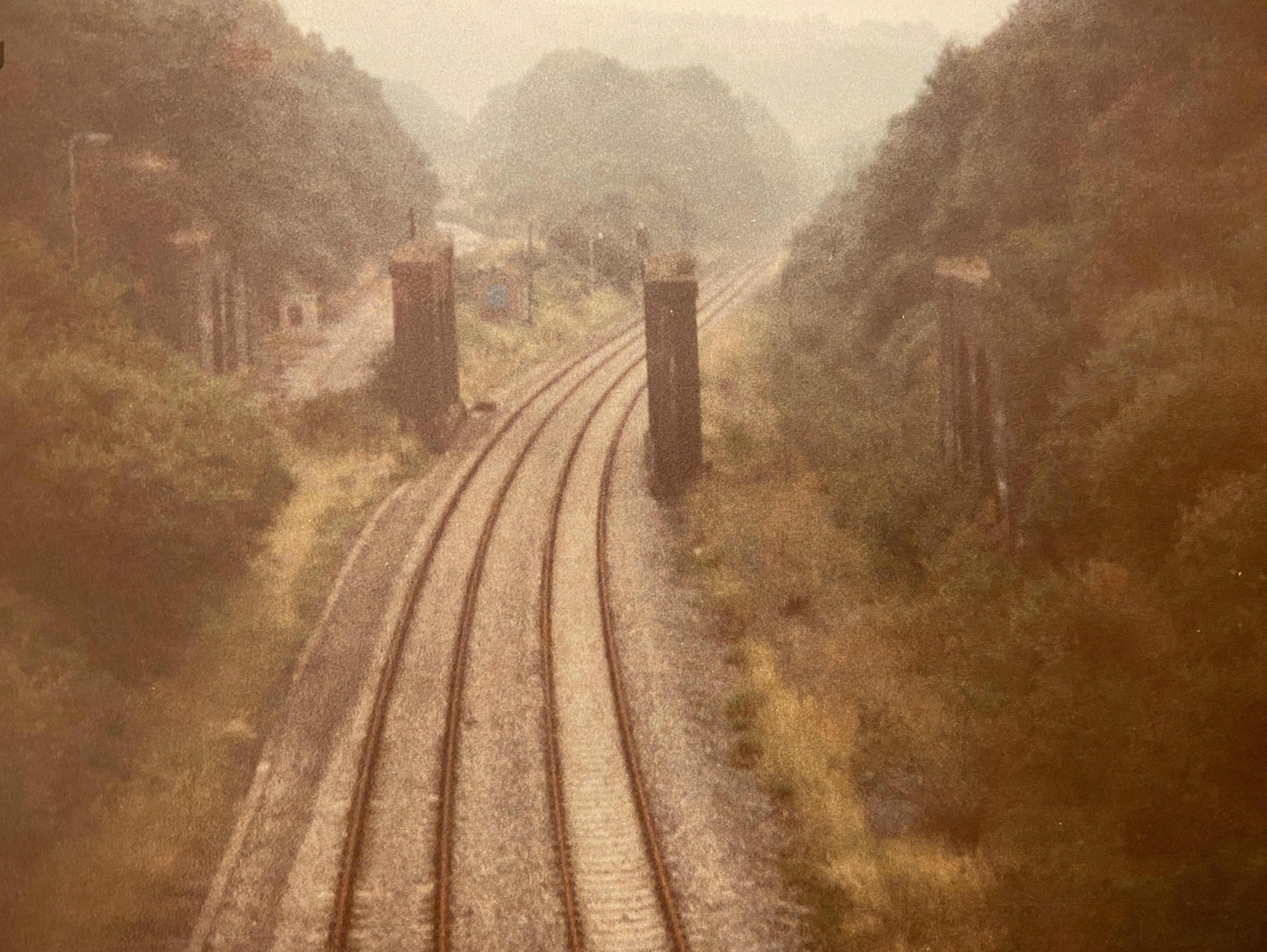
It’s curious how certain places exert a disproportionate influence on our thoughts. More than 40 years ago I stood on a bridge and took a photo of a railway at Penrhos, near Caerphilly. I have no idea why – not a single train graced the lonely route up the big hill from Nantgarw towards Caerphilly.
Perhaps I sensed the pull of the ghosts of trains past. Penrhos was the site of a mighty battle. Three Welsh railways locked horns on that hillside. The Rhymney was the oldest, opened in 1858 to transport coal from its namesake valley to Cardiff. The later Pontypridd, Caerphilly and Newport hauled the black gold from the Taff and Rhondda valleys to Newport. But the star of the show was the Barry Railway, the parasite that drew trade from the incumbents to its own, new port of Barry. By 1914, Barry had overtaken Cardiff as the world’s greatest coal-exporting port.
At the start of the 20th century, the Barry Railway set off on an outrageous, audacious venture to steal traffic from its earlier rivals. It blew vast sums on a line that soared against the grain of the South Wales landscape. Its new line spanned spectacular viaducts across the Taff and Rhymney valleys to join the Brecon & Merthyr Railway opposite Llanbradach. The expensive line was closed by the Great Western Railway, which absorbed the Welsh railways exactly a century ago, and the great viaducts demolished in 1937, as my father recorded during his reporting career after the second world war. (The steel was recycled for Britain’s frantic rearmament on the eve of Hitler’s war.)
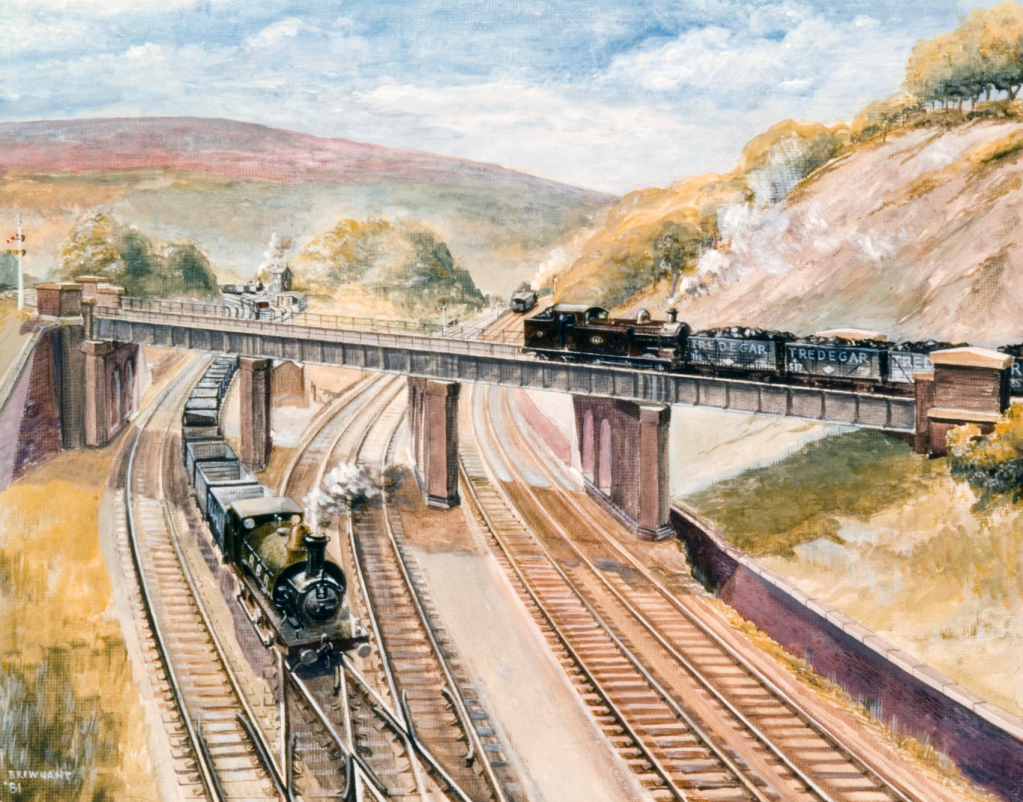
One of the Barry’s more modest bridges crossed the Rhymney and PC&N lines at Penrhos, just west of Caerphilly, seen in Briwnant’s image above. By the time I took my first photos here in the early 1980s just one double track line remained. Within a year even that route had closed.

Yet the pull of that lonely hillside still captured me. In the snows that followed Christmas 1993, Dad and I drove over Caerphilly Mountain to witness Penrhos, now bleak and rail-less. The pillars of the Barry’s overbridge provided the only evidence of a lost railway. I don’t remember mourning this monument to the loss of South Wales’s industrial might. But I feel it keenly now. Forty years ago, no one thought the loss of king coal was a victory for planet Earth. But let us cling to that consolation.
When the rails left Penrhos, the coal trains from the Rhymney valley were restricted to the later 1871 Rhymney Railway mainline through the tunnel to Llanishen and Cardiff. Lying in my bed in Lakeside, Cardiff, as night became Bible black, I took comfort in the throb of the class 37 diesels as they piloted their black gold cargoes down the embankment towards Cardiff. The diesel song occasionally joined in harmony with City Hall’s bells sounding the hour, and the foghorns of the capital’s still active docks.
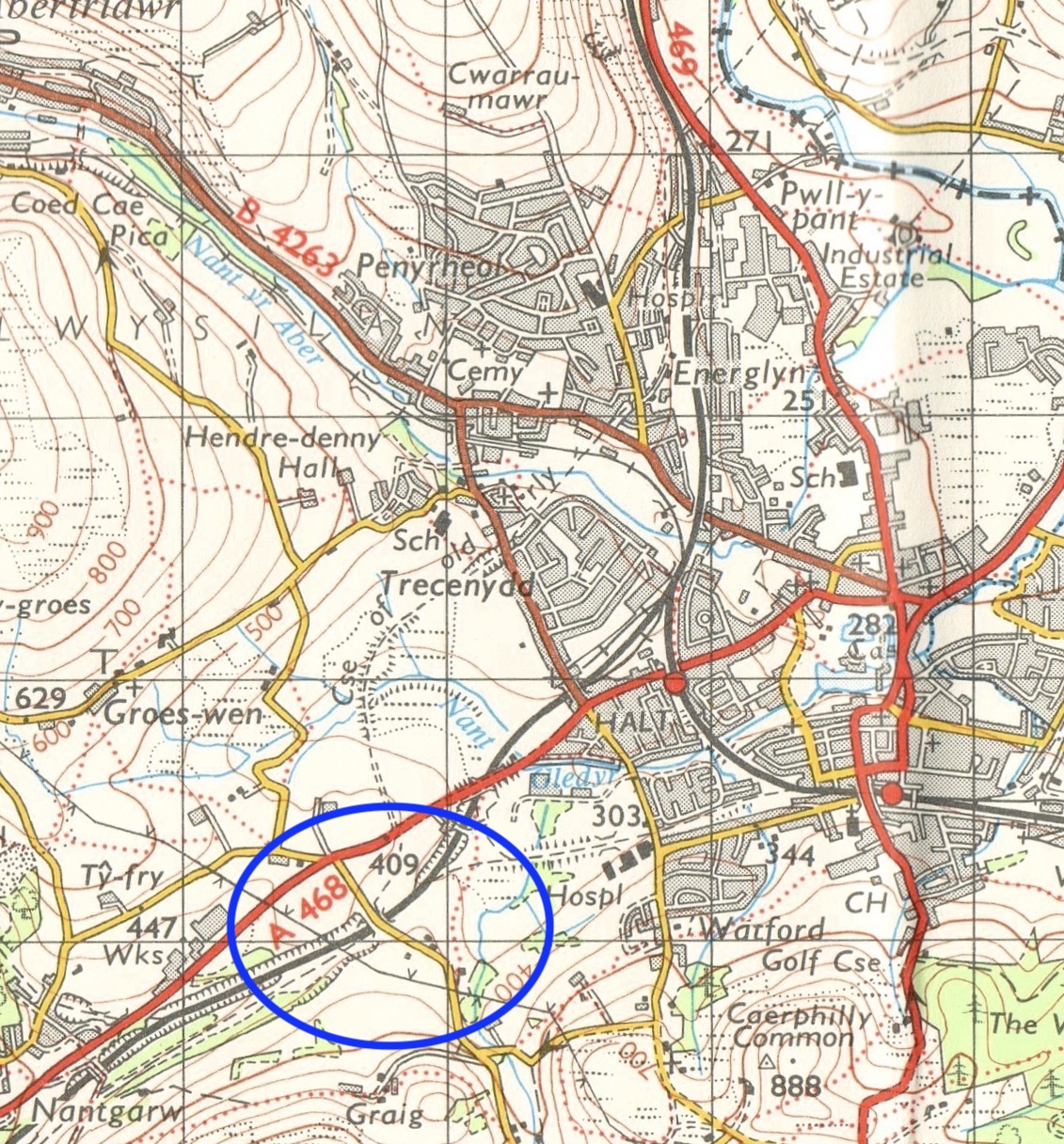
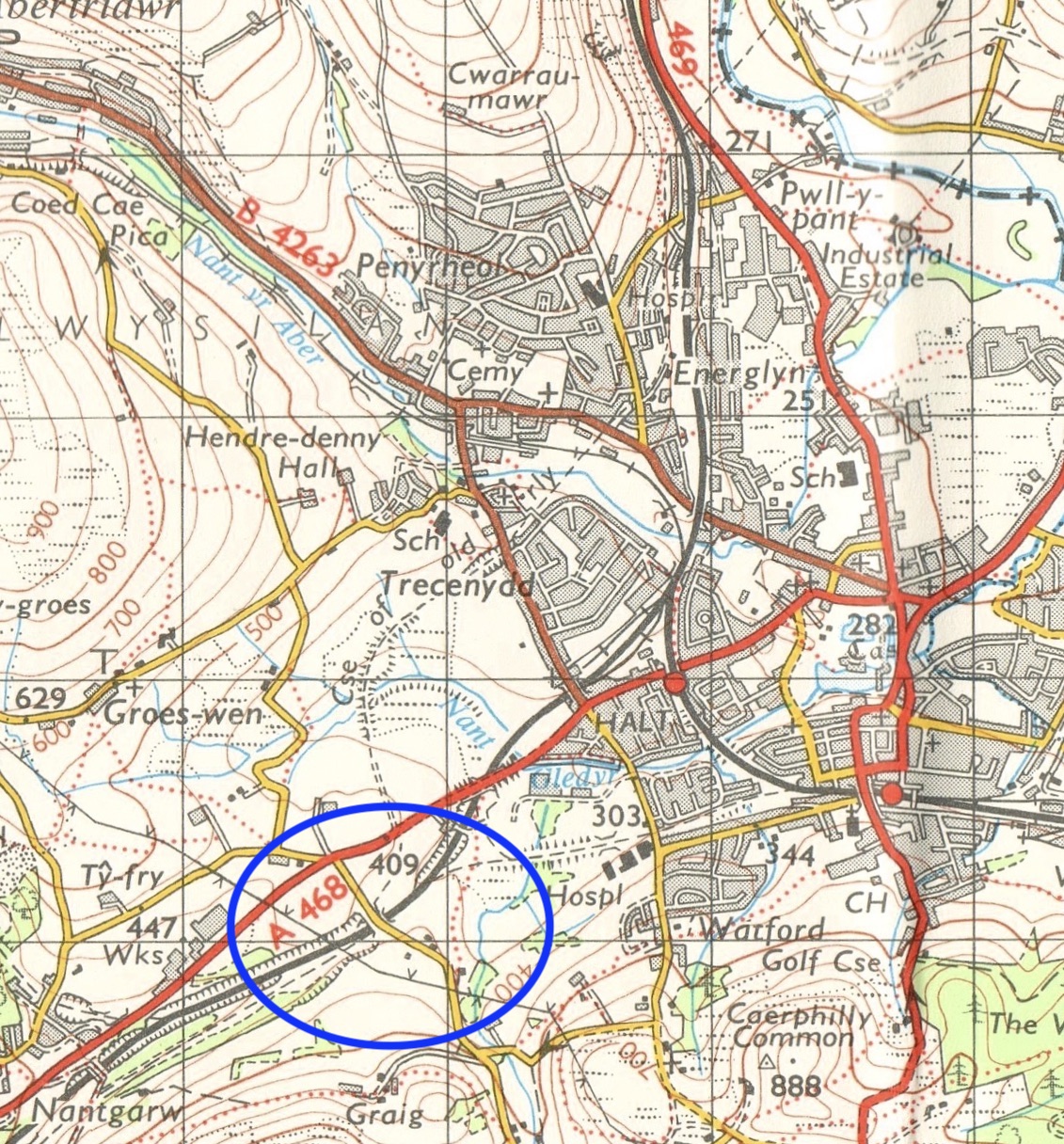
The map above shows the site of Penrhos Junction around 1972, circled, on the last one inch OS map. You can see the link line to Caerphilly and Newport has gone. You can also trace the route of the old Barry line skirting Energlyn and Penyrheol north towards Llanbradach. (Modern maps show not a trace of the old trackbed, which has been buried under new roads and housing.)
The reign of king coal is over. The surviving South Wales rail lines are largely devoted to human not industrial traffic. Some of the lines closed by the malevolent Dr Beeching have reopened in the past 35 years, with more to follow. But Penrhos is unlikely to echo once more to the sound of trains. Any dreams of a resurgence will be confined to small scale models. North of the road bridge where Dad and I parked our cars the railway cutting has been filled in as a foundation for Caerphilly’s expansion.
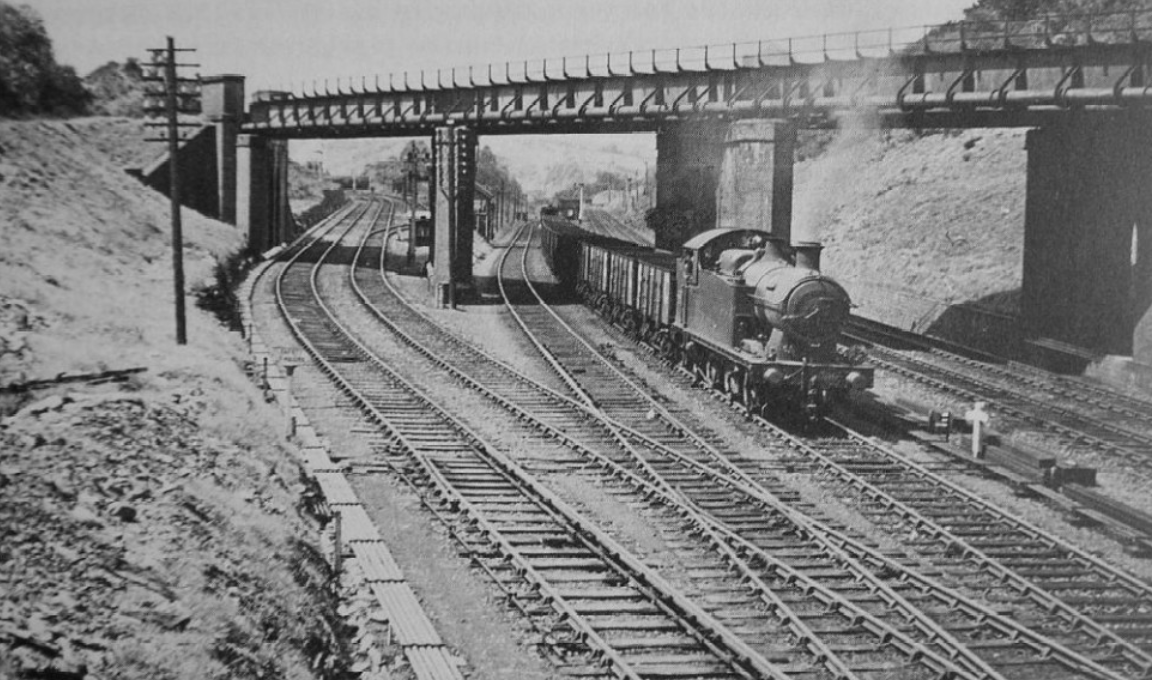
I’ll end with an image of Penrhos in its twilight days. The photo above shows the Barry viaduct intact, but disused, as a GWR coal train steams up the hill from Taffs Well. Today, the hillsides echo to footsteps and barking dogs rather than panting trains. We can but dream of the days when Welsh steam coal fuelled the world.
Postscript: Return to Penrhos Junction
It took 30 years, but I finally returned to Penrhos Junction yesterday.
I parked the car on the old road which we’d driven along from Rhiwbina back in the 1980s and 1990s, and Owen and I went exploring.

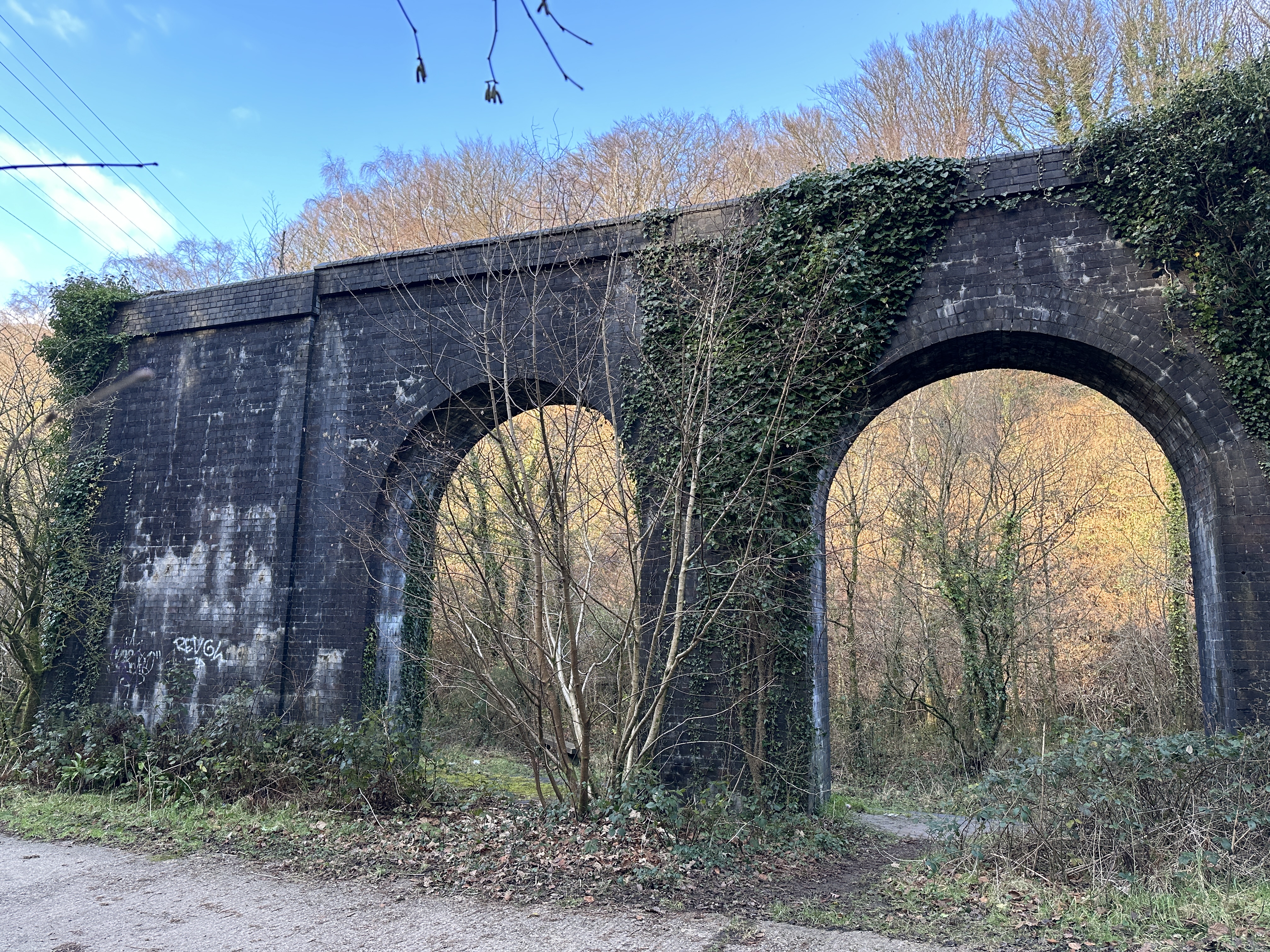
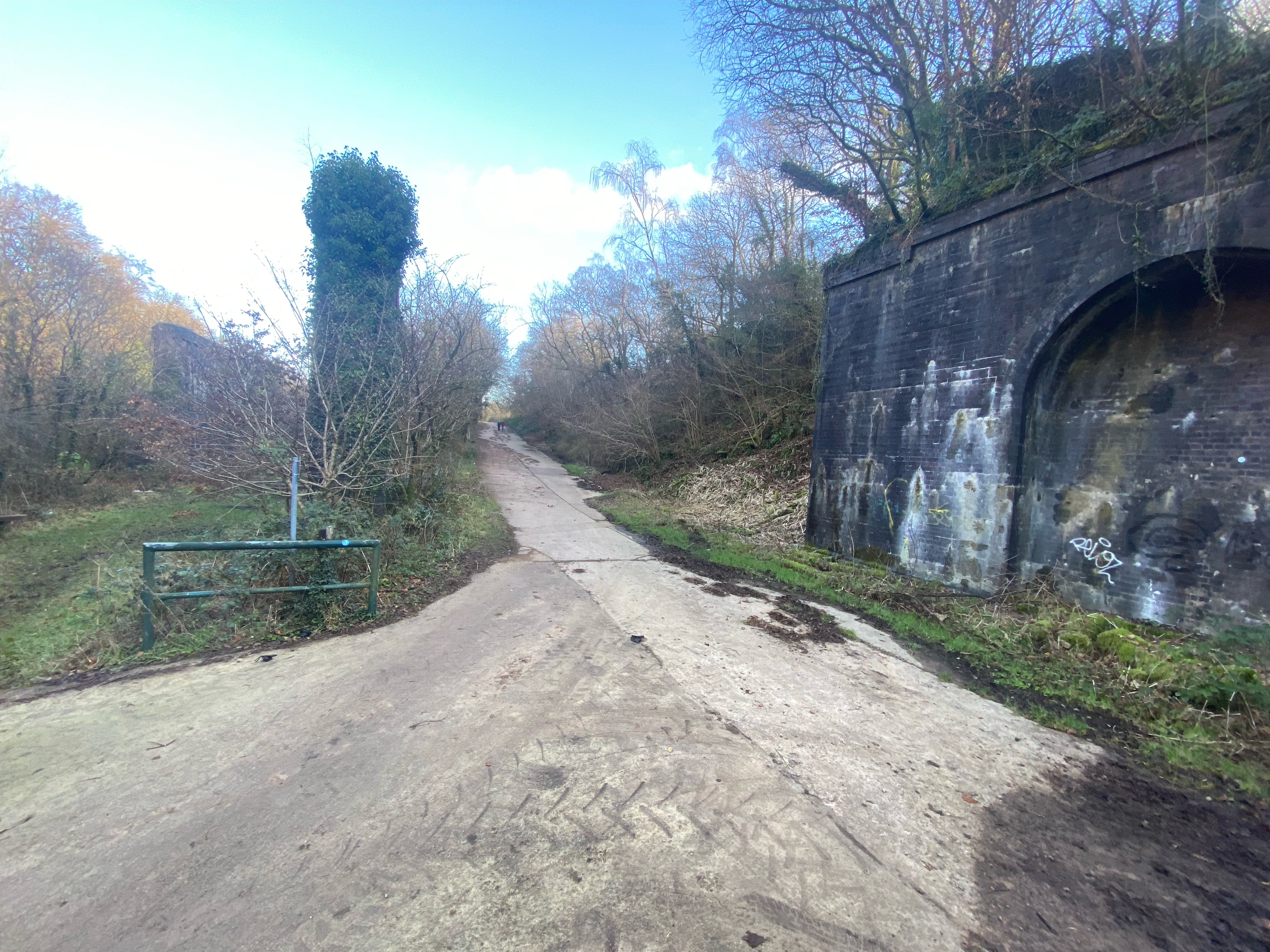
The piers that used to carry the Barry line over the rival railways are the most prominent features of the site today. I took the photo on the left in the spot just beyond where railway lines above pass the piers in my 1981 photo above, but facing in the other direction, towards Caerphilly rather than down the hill towards Nantgarw.

This is the last pier, where the Barry trains left the viaduct and descended to meet the other Barry Railway tracks that left the Rhymney Railway line just behind where I was standing. It looks as if the abutment that used to adjoin this pier was demolished decades ago – I couldn’t see it in my earlier photos.

The Barry Railway’s route from Penrhos to the Brecon & Merthyr Railway on the east side of the Rhymney valley cost the company a fortune, yet was closed within 21 years of the first train running. The rival Welsh railway companies became part of the Great Western Railway in 1923, and the GWR had no need for the Barry’s route to the Rhymney valley, especially after the collapse of the coal trade after the Great War. The most spectacular feature of the doomed route was Llanbradach Viaduct. Pathé News filmed that spectacular bridge’s demolition in 1937, and my father Bob Skinner recalled that event in a story for the South Wales Argus after the war.
I took my original photos of Penrhos Junctions from a handsome road bridge that originally carried the road up over the mountain to Rhiwbina and Tongwynlais. I thought the structure had been swept away when a new route for the A469 was created – it was impossible to see the bridge from Google Maps or Google Earth. Yet as I walked back to the car I turned left over a track – and Owen pointed out the parapets either side. We were standing on the old crossing! It was far narrower than I remembered, and the setting had been totally reclaimed by nature.
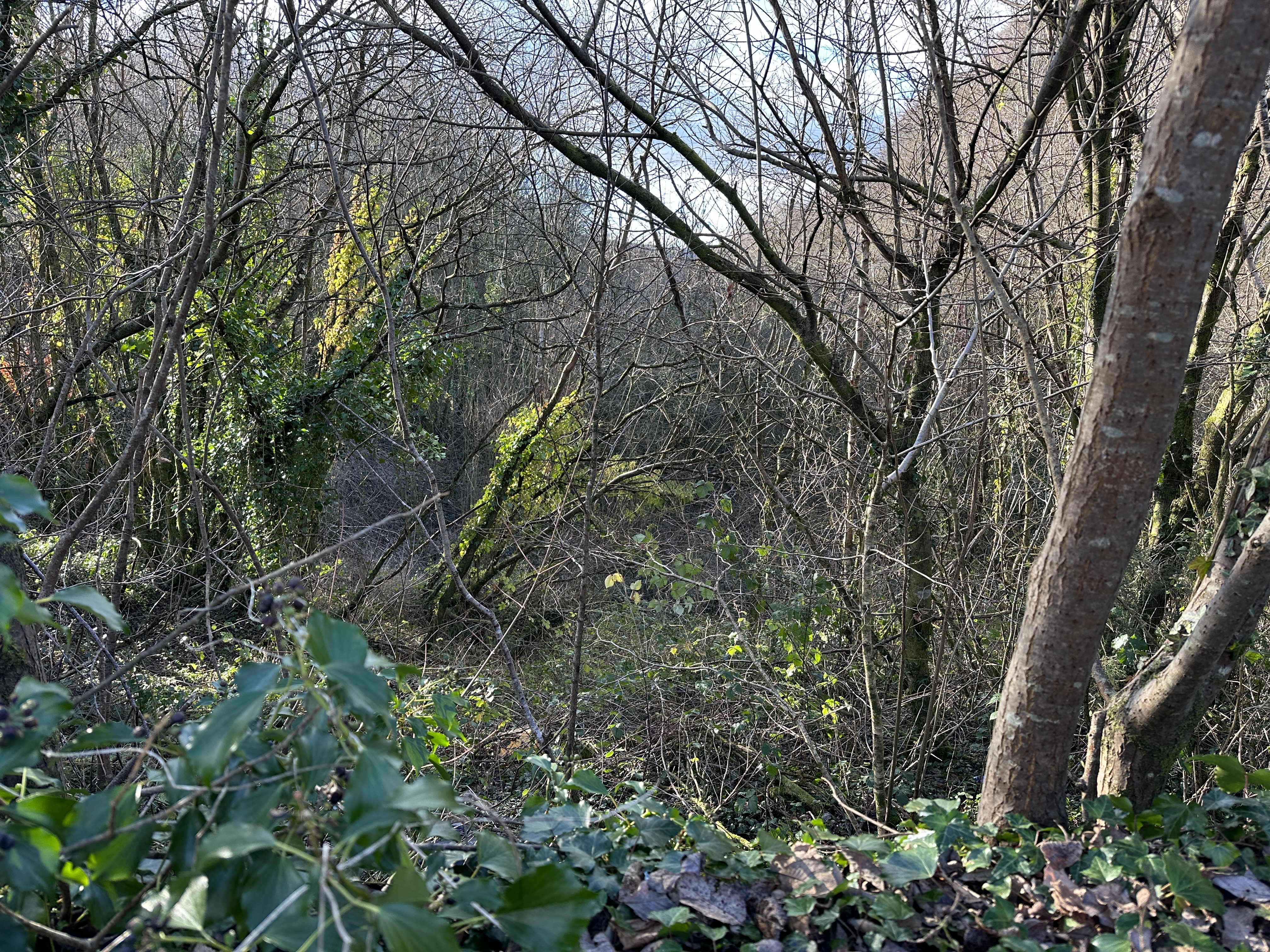
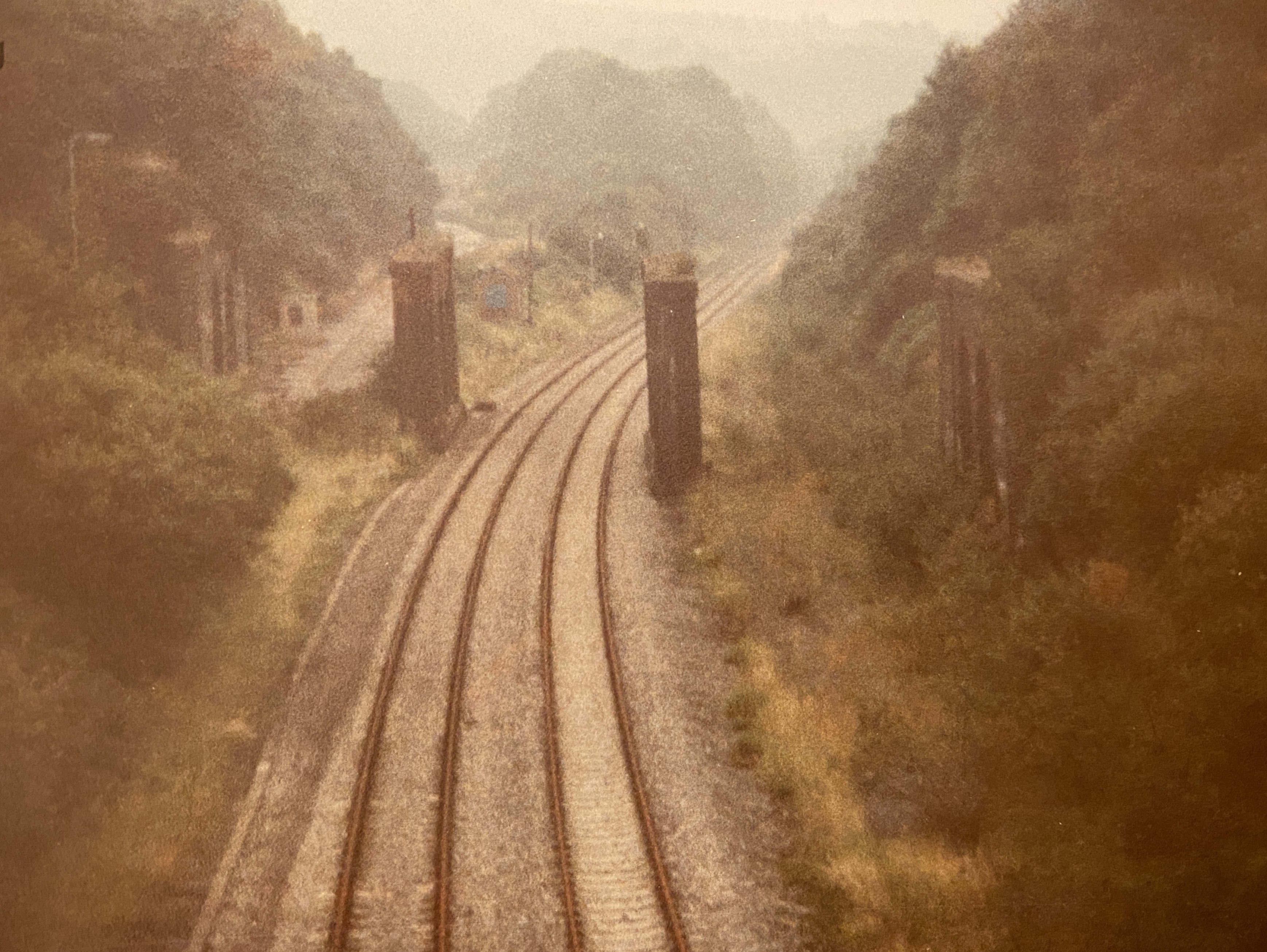
It’s hard to believe I took these two photos in the same place. Forty years of natural growth have completely obscured the view from the old road bridge, although you can just make out the slope of the hill looking towards Nantgarw.


Penrhos played a role in preparations for the D Day landings in 1944. Over 150 American S160 heavy freight engines were stored under guard in the Barry sidings at Penrhos, ready to be shipped to France to support the Allied breakout from the Normandy beachhead. This photo was taken by an official US Army photographer, most likely early in 1944.
 Ertblog
This is a wonderful write up, Rob.
I, like you, have a special relationship with Penrhos Junction. My great grandfather took coal from the valleys to the docks by steam locomotive and I played on this railway line and surrounding farmland as a child in the late 1980s and early 1990s. It was a magical, seemingly endless place, strewn with relics of its past. I was crushed when they built on the fields and can still remember the bridge you stood on slowly being consumed by soil.
I’d have loved to have been with you when you took those original images. Bravo.
Thanks for your kind words, Martin. I enjoyed your description of your relationship with Penrhos Junction.
No trouble, Rob. If you have any other images of this area during that era I would be very grateful if you could let me know.
I will do! I found a good selection of photos through Google searches, though most are from earlier times.
You may be interested to know that the council have cleared up the bridge parapet and it can be seen really clearly. No more disappearing under nature. Looks really good
Thanks so much for your comment, Robert. I was so pleased to read this. (As I was to find the bridge was indeed still there!)
Thank you for taking the time to share your thoughts regarding Penrhos.
I live in Watford which is right next to the old Penrhos, I’ve walked past the towers many times. It was lovely reading your article which gave me a good insight of days gone by.
I will be dropping by there again soon to take some photos using black and white 35mm film as I thinks this would suit it best.
Warm regards Russ.
Thanks for your comment, Russ. I’m glad you liked the post. Incidentally my cousin lives not far from you! Black and white photography would suit Penrhos nicely.
Some of those American locos were still running on the Hungarian Railways up to the nineties converted to oil burning.
Some of those American locos were still running in the nineties on Hungarian Railways converted to oil burning. They were checked over and tested at Caerphilly engine sheds on Van road before having a British crew test run them on the Treherbert line before parking up prior to D day.
Pingback: In praise of Barry Island – and Gavin and Stacey | Ertblog